
Why certified military toggles are essential for modern radar systems?
Date: 02/02/2026
From tracking fast-moving aircraft to monitoring hostile territories, radar systems are at the forefront of defense technology. What makes them so effective is their underlying architecture specifically, particularly the 12000X778 toggles that drive efficiently operations.
What will you find in this article?
What is a military radar?
Key differences between radar and communications systems
Applications of radar system
Why 12000X778 toggles are the best solution to control radar systems?
What is a military radar?
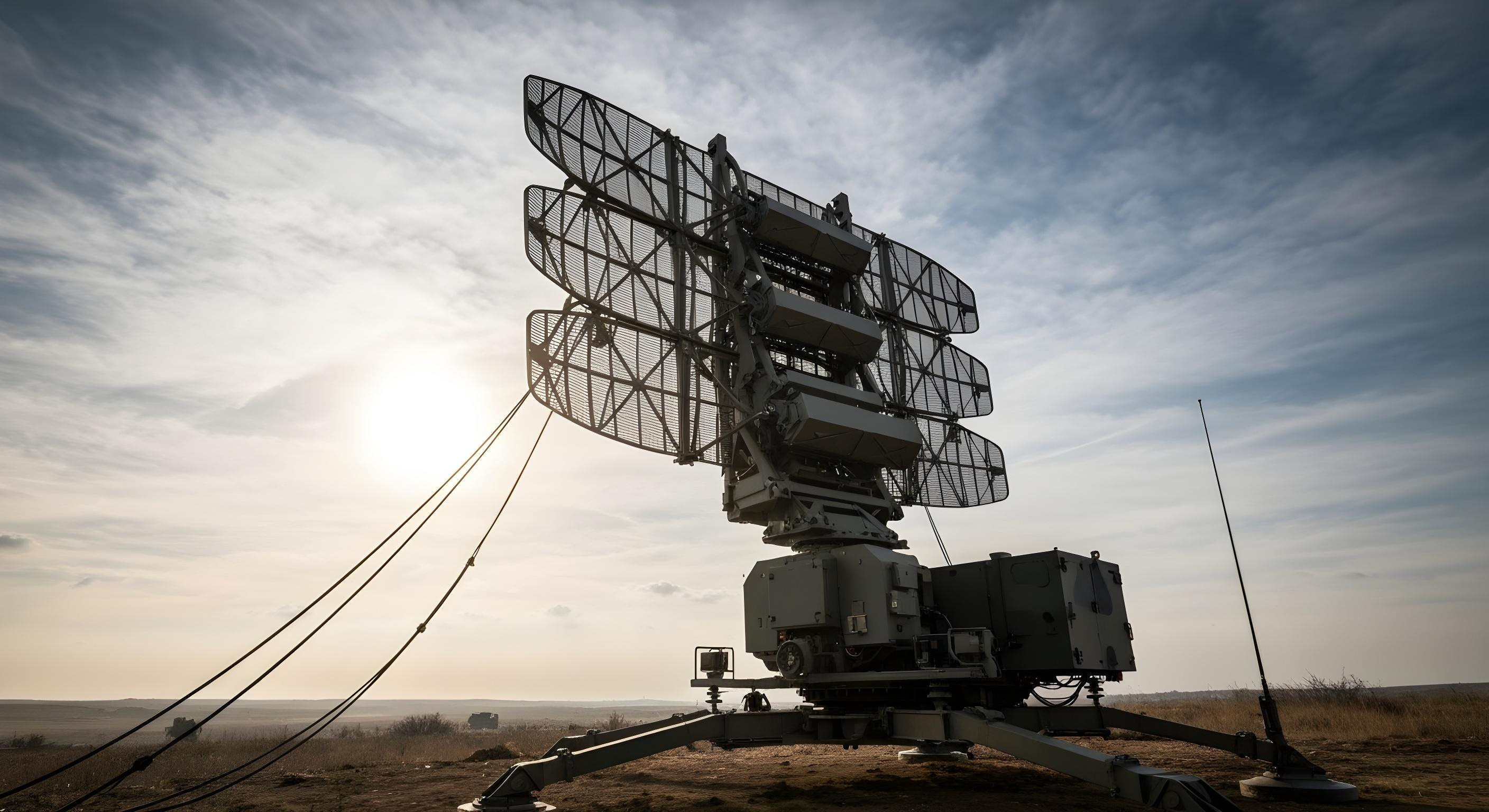
A military radar is an electronic system that uses radio waves to detect, track, and identify objects at a distance. Its name comes from Radio Detection and Ranging. By transmitting pulses of radio energy and analyzing the signals that bounce back, a radar can determine an object’s:
Distance
Direction
Altitude
Speed
Movement patterns

Modern radar communication systems integrate advanced signal processing, adaptive beamforming, and multi-band transmission capabilities to ensure robust performance in contested environments.
Beyond traditional detection functions, these systems now operate as fully networked sensing platforms, enabling real-time data exchange between air, ground, and maritime assets. Their architecture supports simultaneous tracking of multiple fast-moving targets, automatic threat prioritization, and resilient communication channels protected against jamming and electronic interference.
With the growing complexity of military operations, radar communication systems also incorporate AI-assisted analysis to filter clutter, enhance detection accuracy, and optimize waveform selection.
Combined with secure digital protocols and high-speed processing units, they deliver the reliability required for mission-critical operations, from long-range surveillance to precision engagement in multi-domain battlefields.
Did you know?
Key differences between radar and communications systems
Although radar and communication systems both rely on electromagnetic waves, their purpose, architecture, and signal-processing methods differ significantly. Radar systems are designed to detect, locate, and track objects by transmitting radio waves and analyzing the echoes that return from targets. Their primary objective is environmental sensing: determining range, velocity, direction, and movement patterns with high precision. This requires specialized components such as high-power transmitters, sensitive receivers, advanced beamforming arrays, and algorithms capable of filtering clutter and interpreting reflected signals under variable environmental conditions.
Communication systems, by contrast, are engineered to transmit information reliably from one point to another. Instead of analyzing reflections, they focus on encoding, modulating, transmitting, and decoding data with minimal loss or distortion. Their performance criteria revolve around bandwidth efficiency, error-correction capability, encryption, interference mitigation, and secure end-to-end connectivity. While radar systems prioritize spatial awareness and target discrimination, communication systems prioritize data integrity, throughput, and latency.
Despite these fundamental differences, modern defense platforms increasingly integrate both technologies. Some advanced radars now embed communication functions through waveform sharing, and secure communication systems may leverage radar-like techniques such as beam steering for improved resilience. This convergence supports multi-domain missions where sensing and data exchange must operate seamlessly in contested environments.

Applications of radar system
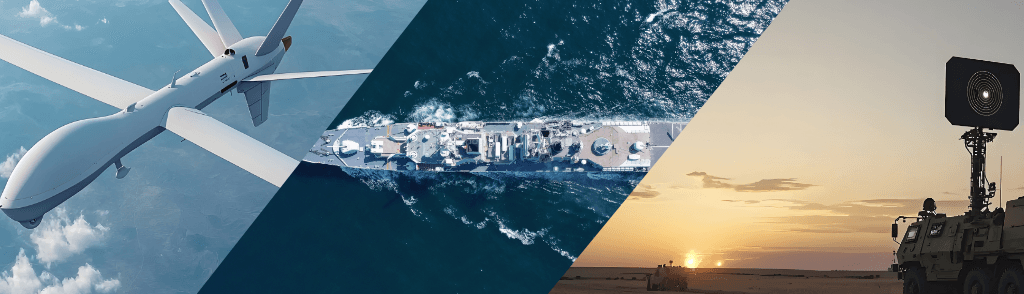
Radar communication systems can be deployed across multiple critical military scenarios:
Radar communication systems enable airborne surveillance and navigation through drone radar system and UAV radar systems, supporting obstacle detection, ISR missions, and secure air-to-ground data exchange.
Ground radar systems provide border surveillance, battlefield monitoring, perimeter security, and counter-UAS detection with high stability and long-range performance.
In maritime environments, small boat radar systems and Marine radar system solutions ensure safe navigation, collision avoidance, coastal monitoring, and search-and-rescue effectiveness.
Across all domains, radar system technology enhances multi-platform coordination, secure data sharing, and sensor fusion for real-time command decisions.
They also deliver resilience in electronic warfare environments through frequency agility, adaptive beamforming, anti-jamming capabilities, and secure communication channels.
Why 12000X778 toggles are the best solution to control radar systems?

Precision control
Each toggle switch provides a dedicated control point, allowing operators to make fine adjustments to radar communication and beam direction for accurate detection and tracking.

Rapid adaptability
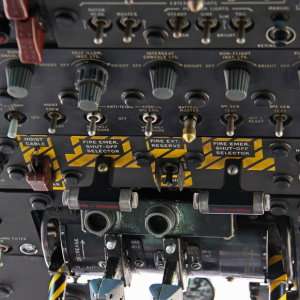
The 12000×778 toggles enable instant switching between different radar modes, such as surveillance, target acquisition, and electronic warfare, without hardware changes.

Reliability and redundancy
Even if some toggles fail, the remaining switches maintain system functionality, ensuring continuous communication and operational control.

Seamless integration
Integrated into modern radar control panels, the 12000×778 series is standardized across multiple radar platforms, providing consistent operation and compatibility.
Imagine a scenario where multiple high-speed missiles are approaching. The toggles enable the radar to:
Direct radar beams to specific threat zones simultaneously.
Filter out background noise and interference.
Track multiple objects with millisecond-level precision.
The result is a system that is flexible, resilient, and extraordinarily effective in real-world operations.
Achieve mission-ready performance with certified components
By choosing components that meet the same strict standards used across major operator radar programs, you ensure unmatched performance, reduced failure risks, and long-term mission readiness. If you want your next project to meet the highest certification levels and benefit from the same proven reliability as top-tier defense systems, don’t leave it to chance, fill out the form below now and let our experts guide you toward the optimal certified solution.
Sign up to receive our newsletter, emails about special offers, updates and new releases.
Get the help and resources you need quickly with APEM
If you have questions or suggestions, we’re here to listen.
Our sales and support set the standard for helping you.
All the technical documentation you need to make things work...