
What are the functions of human-machine interfaces in forklift controls?
Date: 10/06/2026
Forklifts come in various types for specific tasks. Whether you use counterbalance forklifts, pallet jacks, or stand-up forklifts, all are equipped with HMIs that allow operators to precisely control movement and load handling. These human-machine interfaces include a combination of joysticks, pushbuttons, and indicator lights, making for efficient and safe operation in industrial and logistics environments.
What is a forklift and how does it work?
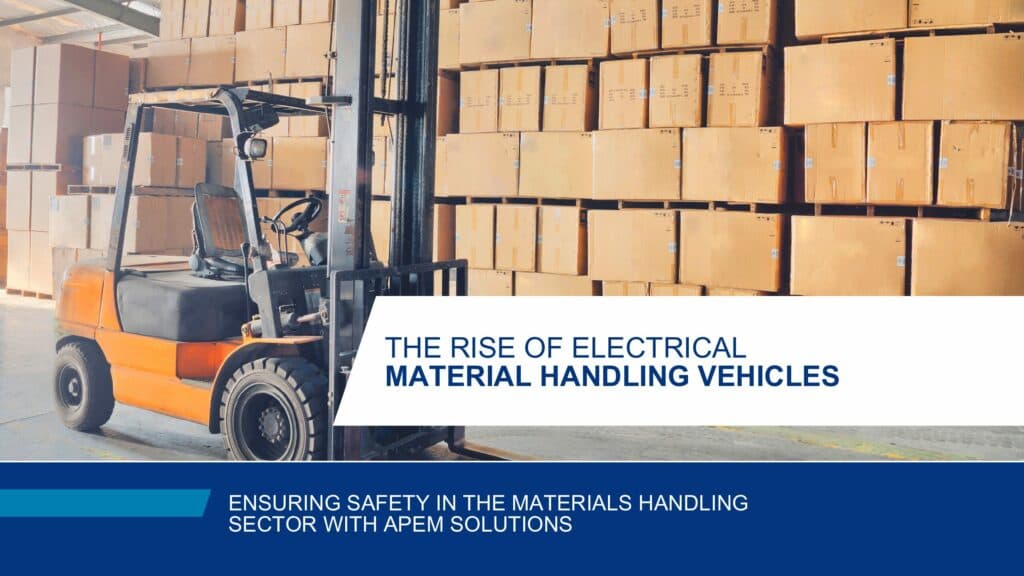
A forklift is an industrial vehicle used to lift, move, and transport materials over short distances. Commonly used in warehouses, construction sites, and manufacturing facilities, forklifts are essential for material-handling tasks.
How it works:
Power source: forklifts are powered by internal combustion engines (diesel, gasoline, LPG) or electric batteries.
Mast and forks: the mast raises and lowers the forks, which slide under pallets or loads. The mast operates using a hydraulic system that provides the lifting force.
Hydraulic system: controlled by the operator through levers, hydraulics manage the raising, tilting, and lowering of the mast and forks.
Counterbalance: forklifts often have a counterweight at the rear to balance heavy loads lifted at the front.
Steering and maneuverability: unlike cars, forklifts use rear-wheel steering, allowing for tight turns in confined spaces.
Operator controls: HMIs (Human-Machine Interfaces) like joysticks, switches and safety functions.
Just as the engine, mast and hydraulics of a forklift truck ensure its movement, the operator relies on a set of HMI controls to maneuver, lift and secure loads. These controls, which range from steering mechanisms to emergency stops, are designed to be precise and efficient, to ensure smooth operation in demanding industrial environments. Let's take a look at the main HMIs that make forklift handling both intuitive and reliable.
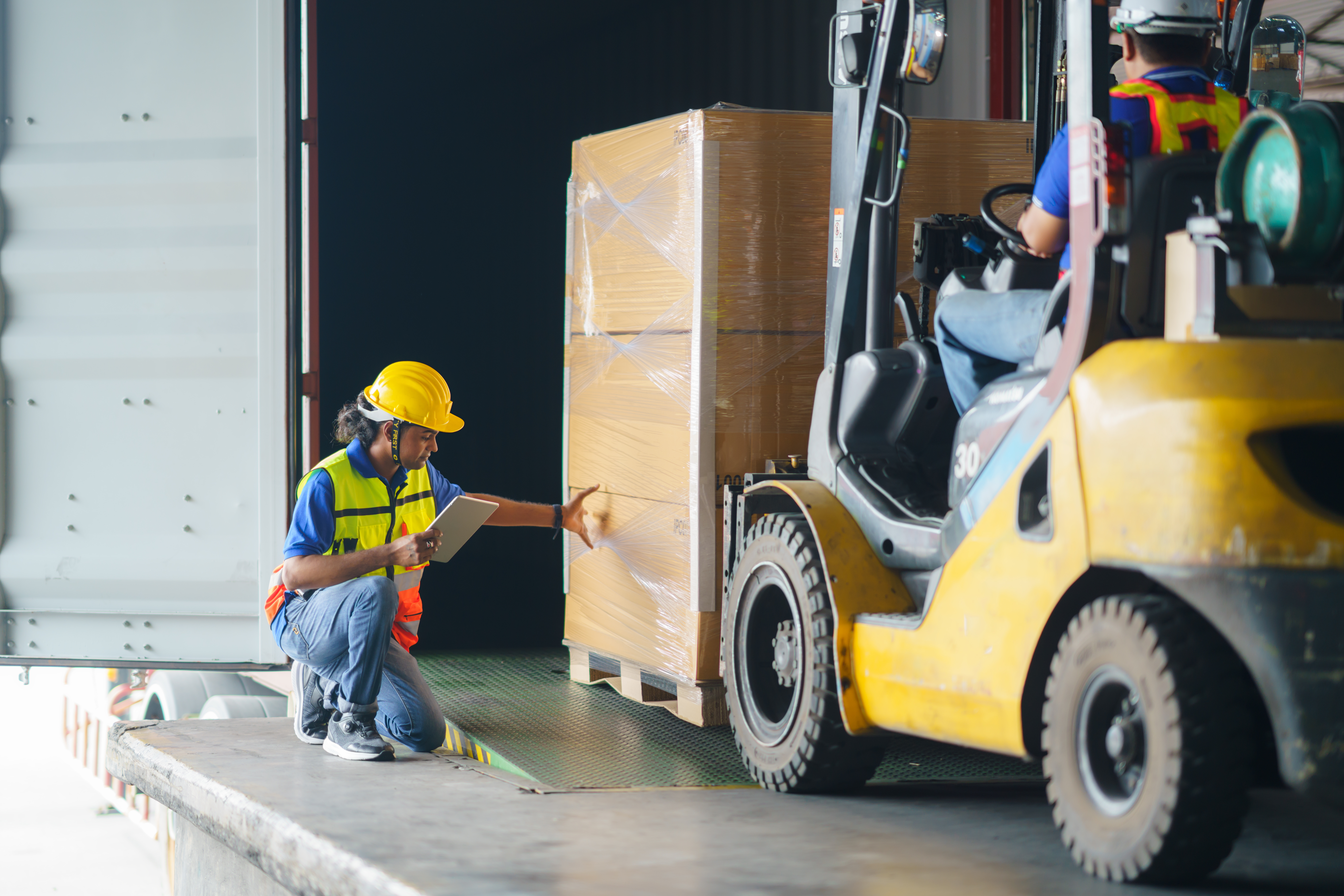
What are the different HMI controls on a forklift truck?
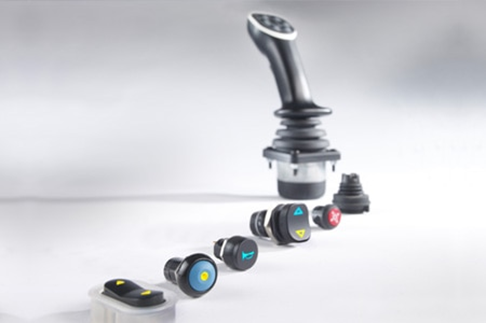
The different HMI controls in a forklift include a variety of interfaces that allow the operator to manage movement, lifting functions and handle safe maneuvers. To operate the fork and mast, lift and tilt levers are used, while joysticks are commonly found in stand-up forklifts like reach trucks and order pickers for more precise control.
Vehicle operation and safety are managed via an ignition switch with start and stop functions, an emergency stop switch (E-stop) for immediate halts, and a dedicated forklift parking brake.
Additional functional controls include a horn switch for signaling, a light on/off switch for visibility, and battery maintenance systems to control the power supply. The system also integrates IV functional safety with a NAMUR contact on the central console.
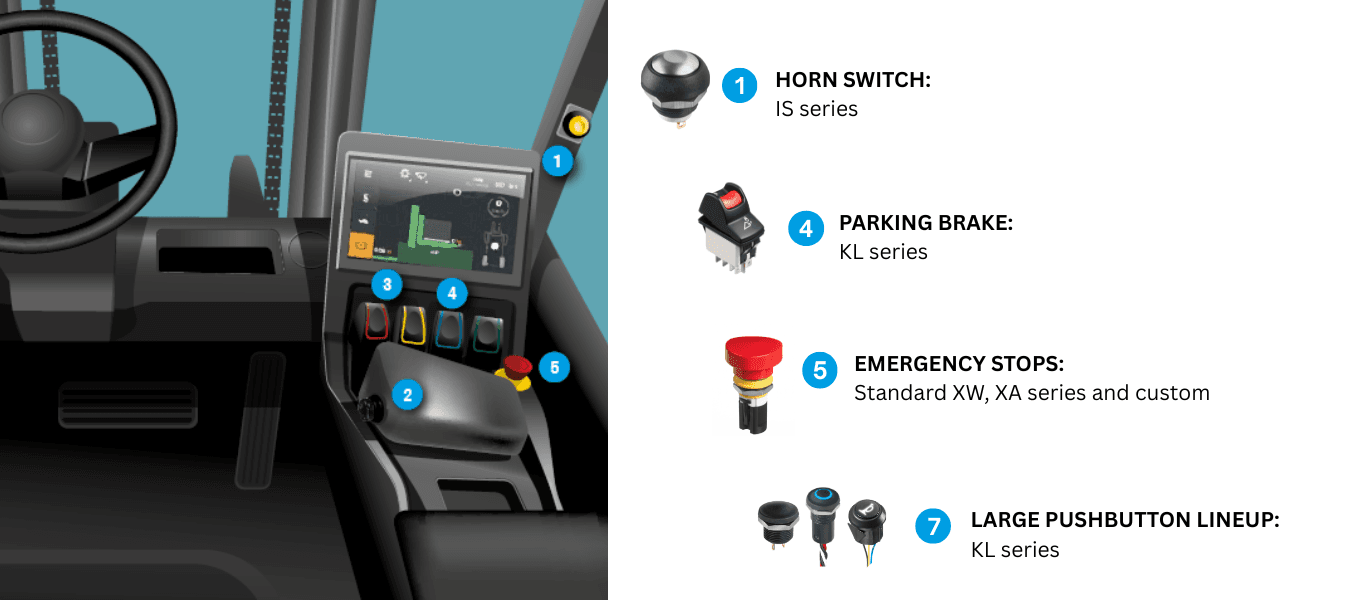
Additional functional controls include a horn switch for signaling, a light on/off switch for visibility, and battery maintenance systems to control the power supply. The system also integrates IV functional safety with a NAMUR contact on the central console.
Monitoring and feedback are provided through a gauge cluster that displays the speedometer, battery level, oil level, and maintenance alerts, complemented by LED indicators for status updates.
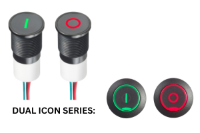
Battery management systems require specific HMIs. APEM can provide you with custom products to help machine operators better understand the level of battery remaining and disconnect it.
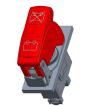
APEM, your best partner to equip your forklift
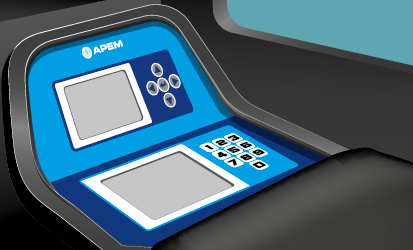
APEM can design and manufacture custom, ergonomic, and safe forklift control panels, including integrated armrests, using specific communication protocols (e.g. CANopen) and SIL2-compliant components. Physical buttons with haptic feedback can be thoughtfully positioned around the screens to ensure intuitive and safe actuation.
Experts’ support for qualified HMIs in forklifts
For years, APEM has partnered with international forklift manufacturers to deliver ergonomic, robust, and customizable HMIs. Our extensive range of standard products adapts seamlessly to all types of vehicles such as reach trucks, pallet trucks, and order pickers. Backed by this experience, our skilled experts are ready to collaborate on your projects, offering tailored support and solutions to meet your specific needs. Whether you're facing technical challenges or looking to optimize operator comfort and performance, we’re here to help you every step of the way.
Sign up to receive our newsletter, emails about special offers, updates and new releases.
Get the help and resources you need quickly with APEM
If you have questions or suggestions, we’re here to listen.
Our sales and support set the standard for helping you.
All the technical documentation you need to make things work...