
Why Integrate a CANbus System?
Date: 12/01/2026
What is a CANbus (Controller Area Network)? What is the CANbus protocol?
The CANbus (Controller Area Network) system is a multi-master, message-based communication protocol developed by Bosch. It enables efficient and reliable communication between electronic control units (ECUs) in real-time systems while reducing wiring complexity. CANbus ensures deterministic communication by prioritizing messages based on importance, enhancing reliability and safety in critical applications.
How does CANbus communication work?
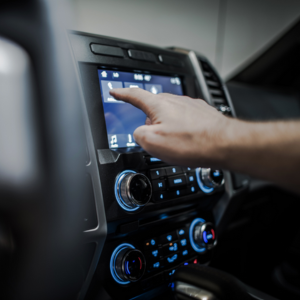
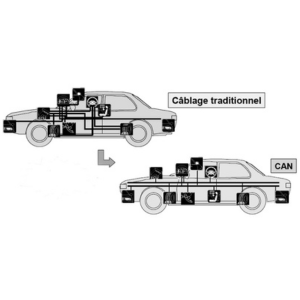
Take the example of a vehicle, automotive, agricultural, or off-road. All dashboard components (pushbutton or toggle switches, indicators) directly operate different functionalities (heating, cooling, lighting) by being connected to a single CANbus cable via PC boards or ECUs. These components communicate alternately over the same bus. The introduction of multiplexed buses (primarily CANbus) in vehicles has drastically reduced wiring, up to 2 km less per car, improving design and reducing cost.
As systems grow more complex (in aviation, telecom, etc.), point-to-point wiring becomes unmanageable. CANbus architecture replaces this with efficient, centralized data communication.
CANbus protocols
Feature | CANopen | SAE J1939 protocol | LIN | RS232 | USB |
Primary Use | Industrial automation | Heavy-duty vehicle networks | Automotive subsystems (non-critical) | Legacy serial communication | PC and peripheral communication |
Communication Structure | Flexible object dictionary management | Fixed parameter groups for vehicle dynamics | Master-slave, single-wire | Point-to-point, unstructured | Host-device hierarchy, layered protocol |
Network Management | Advanced with NMT, SDO/PDO messaging | Simpler, vehicle-focused messaging | Basic sleep/wake control, simple scheduling | None (manual control) | Complex with plug-and-play, power management |
Topology | Bus topology | Bus topology | Bus (single master, multiple slaves) | Point-to-point | Star or point-to-point |
CANbus vs. other protocols
In electronics, choosing between communication protocols like RS232, USB, LIN, CAN depends on application requirements. CAN offers superior reliability and real-time performance. J1939, a CAN-based protocol, is specifically optimized for heavy-duty and off-road vehicles. LIN is suitable for simpler, non-critical tasks, while RS232 is point-to-point and outdated in many applications.

How many ECUs can be connected to a CANbus?
A typical CANbus network supports up to 110/120 nodes, depending on protocol and implementation. J1939 protocol, for example, supports up to 30 nodes and is widely used in heavy vehicles and 254 controllers on the bus.

Advantages of the CANbus system

Simplified operation
Reducing the number of wires simplifies installation and maintenance. In a CANbus car system, troubleshooting becomes easier—errors are memorized and indexed for quick detection and repair.

Cost efficiency
Fewer cables and connectors mean lower production costs and lighter equipment. This translates into lower material, labor, and maintenance expenses.

Functional innovation
The CANbus system in vehicle applications has enabled advancements in many industries, enhancing energy efficiency, security, and system responsiveness. For instance, in military vehicles and electric forklifts, CANbus systems allow seamless coordination of subsystems.
GO FURTHER
Key technical insights
CANbus wiring and baud rate
A typical CANbus wiring setup involves twisted-pair cables with 120-ohm termination resistors at both ends. Baud rates such as 125 kbps (industrial), 250 kbps (J1939), and 500 kbps (automotive) are common. Proper configuration of CANbus baud rate ensures network stability.
Other CAN standards
Protocols like CAN FD (Flexible Data-Rate) and CAN XL (Extra Long) build on the basic CAN protocol, enabling higher data rates and larger payloads. CAN FD supports up to 8 Mbit/s and 64 bytes per frame, while CAN XL reaches 20 Mbit/s and 2,048 bytes—ideal for modern connected and industrial systems
Main applications using canbus systems
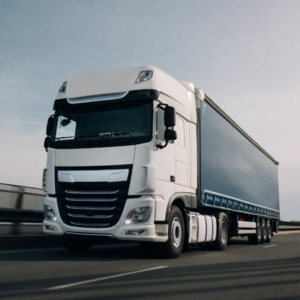
Automotive and transport vehicles: CANbus systems are widely used in cars, trucks and buses to manage communications between electronic control units (ECUs) for systems such as engine management, anti-lock brakes (ABS), airbags and active suspension systems.
Industrial automation and material handling: CANbus is used to control machines and production equipment. It facilitates communication between the various sensors, actuators and programmable controllers.

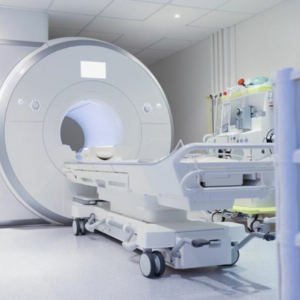
Medical equipment: CANbus is used in medical equipment such as MRI scanners, ultrasound machines, X-ray machines and other operating devices. This technology ensures reliable communication between the various vital medical components.
Construction equipment and off-highway vehicles: In heavy equipment such as bulldozers, excavators and mining vehicles, CANbus enables efficient coordination of the various mechanical and hydraulic subsystems to enhance performance and reduce downtime

APEM’s expertise in CANbus systems
Listening to our clients, we integrated CANbus systems into our HMI solutions. Our teams offer complete interface systems combining switches, panel switches, indicators, and joysticks with standard PC boards and embedded software.
This turnkey solution helps OEMs reduce development time and cost by utilizing internally developed, standardized technologies. Our CANbus controller and CANbus interface solutions ensure reliable, flexible integration with J1939, CANopen and CAN FD compatibility.
Communication tools are essential for the future, and APEM continues to develop advanced CANbus HMIs—including wireless and BLE options for modern connected systems.
Create your CANbus solution with our experts
Whether it’s a CANbus car system, an industrial controller, or off-road machinery using the J1939 protocol, the benefits of CAN communication are clear: simplified wiring, real-time data exchange, scalability, and robust performance.
With expertise in CANbus wiring, CAN encoder integration, and protocol stacks like CANopen and J1939, APEM offers complete, field-proven solutions tailored to the demanding needs of OEMs across various industries.
Get the help and resources you need quickly with APEM
If you have questions or suggestions, we’re here to listen.
Our sales and support set the standard for helping you.
All the technical documentation you need to make things work...